Page 9 – Dodgerslist

Delete!

Arched or humped back

Neuro Corner Answers

Dr. Andrew Isaacs
DVM Diplomate ACVIM (Neurology)
Dogwood Veterinary Referral Center

Primary interests include intervertebral disc disease, seizure management, luxations/fractures of the spine, and surgery for brain tumors

Question

SHARON ASKS
What causes the hump on the back that some IVDD dogs develop?

ANSWER

Dogs with IVDD can have a “hump” or “bump” appearance to their back in three situations: pre-surgical (medical management), immediate post-operatively, and long term post-operatively.

If they have a painful back or neck they will assume a posture that minimizes movement of the spine. Typically, they will arch their back and bring their front and rear legs closer together in an effort to decrease discomfort. This is similar to a human with a bad back – it hurts to stand up straight so they hunch over to help relieve the pain.

Another scenario where we see dogs develop a “hump” or “bump” is shortly after IVDD surgery. First, to perform surgery the hair on the back is shaved off. This in itself will cause the spine to look more prominent. Secondly, when closing the incision the fat under the skin can bunch up and create a “hump”. A seroma (a pocket of fluid under the skin) can also occur post-operatively and create a bump. Lastly, an uncommon cause would be an infection. If you notice a “hump” right after surgery, you should contact your veterinarian and have your pet evaluated. Most of the time it is nothing to be concerned about, but it is better to be safe.

We have seen dogs that have a slight arch in their back 2 months or more after surgery. There is no definitive answer as to what is causing this. We speculate that it could be that the muscles are still healing. Part of the surgery involves elevating muscle off the bone/vertebrae and it never re-attaches perfectly like before surgery. So, the spine will be a little more prominent than before. Regardless, this is not a life-threatening problem when seen and when the hair regrows will be hardly noticeable.

If you are concerned about any bump or hump it’s best to have your veterinarian check it out.

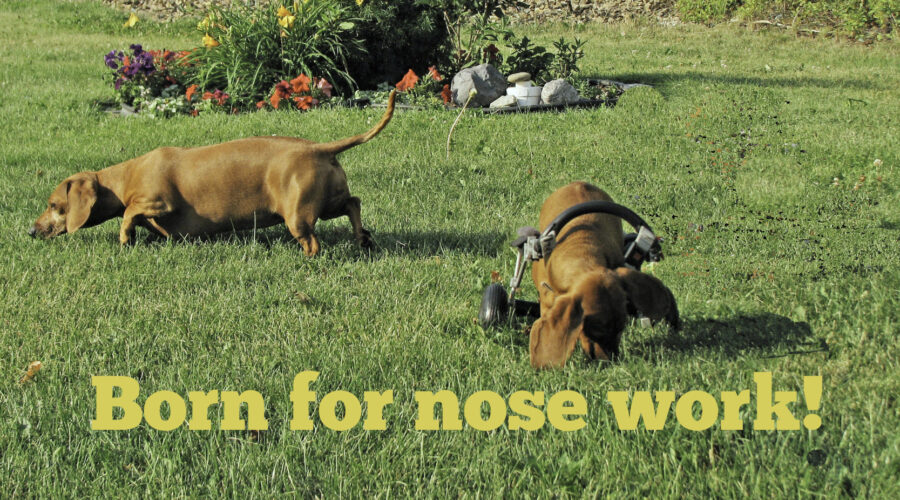
Nose work – safe – fun for IVDD dogs

The best fun thing for your IVDD dog is nose work. Great tips on nose work around your home. Are you adventurous? Check out some advanced nose work for your dog!

Continue Reading

Ramp Training- tips from two professionals

Protect the IVDD dog’s discs and back from impact of steps and stairs. Learn the tricks and tips to train your dog to use ramps. You can help your dog learn to use a ramp. Learn the tricks to training from two pro trainers!

Continue Reading

Schedule to re-introduce back friendly home activities

Tips and Ideas introduce back friendly home activities and home modifications for your IVDD dog after graduation. Learn how to train for 4 paws on the floor and more.

Continue Reading

Panting cause

Neuro Corner Answers

Dr. Andrew Isaacs
DVM Diplomate ACVIM (Neurology)
Dogwood Veterinary Referral Center

Primary interests include intervertebral disc disease, seizure management, luxations/fractures of the spine, and surgery for brain tumors

Question

PAULA ASKS:

Panting is a recognized side effect of Tramadol, what is the reason… anxiety related or ?  Is panting plus pupil restriction related and is there a way to ID tramadol as the cause for panting? What can the owner do to comfort the dog?  Can continued heavy panting be a concern to cause health issues and a reason to get vet help?

Panting with steroids, can be related to intolerance to temperature and is a temporary side effect.  Is there anything other than increased circulation of air, a cool surface to lie on that would help

Panting with pain,  how frequently do you observe this sign in your practice with a disc episode as opposed to shivering, yelping, reluctant to move, arched back, etc.?

Panting is not listed as a side effect by the FDA for NSAIDs. There are owner anecdotal reports of NSAID-related panting and Web postings by DVMs saying panting is an overdose sign of NSAIDs.   www.1800petmeds.com does lists panting as an overdose symptom.  In your opinion is panting while on a NSAID commonly an indicator that the NSAID should be stopped at once and vet help sought?

ANSWER

To be honest I am not certain of the cause for panting with tramadol.  If it is noted,  the owner should notify their vet and if no response is optioned by the time the next dose is due either not give or give 1/2 the dose.  If the panting becomes a concern for the owner it would be best to take the pet into their vet or ER.  Most if the time it is not going to cause health issues, but better to be safe than sorry.

The panting with steroids can also be anxiety related too, so sometimes something to distract the dog helps.

The other signs you describe (shivering, yelping, reluctant to move, arched back, etc.) we appreciate more than panting in cases with intervertebral disk disease.  I frequently appreciate panting when the dog is anxious secondary to having a full bladder, or needs to defecate.

Panting with NSAIDS is a tough one – similar to tramadol.  If it is noted the owner should either not give or give 1/2 the dose when it is due again and notify their vet.  If the panting becomes a concern for the owner it would be best to take the pet into their vet or ER.  Most of the time it is not going to cause health issues, but better to be safe than sorry.

The hard part with a panting dog is most of the time the dogs are not on a single medication and it can be difficult to determine which of the meds could be contributing.  So, it is matter of going with the most likely cause first and down from there.

Take care,

Andrew

Cart dogs- Multiple disc issues possible?

Neuro Corner Answers

Dr. Andrew Isaacs
DVM Diplomate ACVIM (Neurology)
Dogwood Veterinary Referral Center

Primary interests include intervertebral disc disease, seizure management, luxations/fractures of the spine, and surgery for brain tumors

Question

If a dog is already in wheels due to IVDD and not likely a chance of recovery, can the spine get re-injured to where the spine is worse? Where the dog is in constant pain? Needs another surgery? Needing to try conservative treatment for the re-injured area?  ~Frenchie owner

ANSWER

Unfortunately, the answer is yes – dogs in wheels can have another disk issue either at the same site or a different one. Issues that can arise are pain and more severe neurological deficits.  In cases where the pain is not responding to medical management or the neurological deficits are more severe surgery could be considered to address quality of life.

Andrew

Sleeping position

Neuro Corner Answers

Dr. Andrew Isaacs
DVM, Diplomate ACVIM (Neurology)
Dogwood Veterinary Referral Center

Primary interests include intervertebral disc disease, seizure management, luxations/fractures of the spine, and surgery for brain tumors

Question

My 4 year old girl, Olive, had surgery last monday… I am just wondering… she is wanting to sleep on her sides (she was always one to do this pre- surgery).. for the first many days she tried to sleep on her stomach and I propped rolled towels on either side of her to keep her straight but more and more as the days go by she is rolling over to her sides and stretching out a bit more (she seems most comfortable this way)…. is this ok? I am so paranoid of her hurting herself again.

ANSWER

You can feel comfortable letting Olive sleep in whatever position she feels most comfortable. You just want to avoid her making quick or jolting movements that would stress the surgery site out.

Andrew

Neuropathic pain

Neuropathy is a type of phantom pain when the spinal cord has had severe damage. The mind “feels” pain from paralyzed legs no longer having nerve connection— no longer able to send pain messages to the brain.

Continue Reading

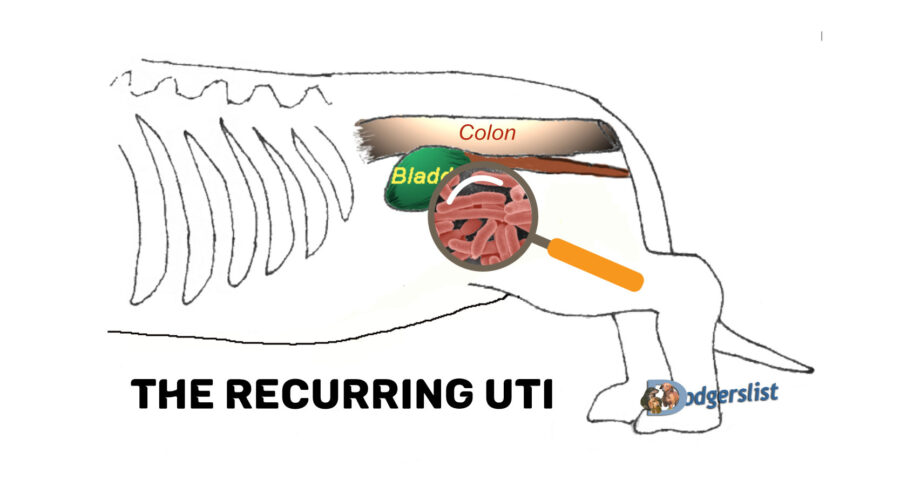
Frequent bladder infection (UTI) – urinary tract infection

Bladder bugs, the good and the bad. Why some UTI’s keep returning and what to do.. When frequent bladder infection (UTI) occurs, it’s time to work with your vet. This article ranges in ideas for at home to strategies for vet discussions.

Continue Reading

Incontinence tips

Tips and ideas for incontinent dogs: garments, exercise, expressing and fluids, recurrent UTI.

Continue Reading
Scroll to top